Outdoor Adventures with Gary Lee - Vol. 373
We got a few thunderstorms rolling through here last night and some missed us. We got a little rain, but we need more. There have been a few fires here in the Adirondacks and as dry as it is when these thunderstorms pass through, they could start more. The first two fires I had in the Moose River Area in July of 1966 were both started by lightning. Then in August one was started by a camper fire left unquenched in the duff. That last one burned five acres on the backside of Squaw Lake and took over a week to pump water on from the lake to put out as it burned four feet in the duff. It was dry like it is now so, be careful when you are out and about and have a campfire. Put it dead out to the touch of your hand.
Some rain is predicted during this week, and a few inches would be good. Most of the Loons are done nesting so they won’t get washed out but there are a couple that are nesting on third nest. That doesn’t happen very often, but some Loons are persistent and one year I had chicks hatch on the fifteenth of August, and these chicks did make it out before freezing up. With the weather we have now, the lakes are freezing up at later dates so there should be no problem getting out to go south. Some do wait too long yet and get frozen in thinking they could spend the winter, and we do try to rescue them and move them to open water.
We had a rescue of a chick this week as our Loon watchers were out, they witnessed one chick trying to drown its sibling. It is competition from day one out in the wild and they saw it happen. The injured chick was left as the parents and other chick swam away. It went to shore and beached as if it knew it would drown because it couldn’t hold its head up. Adults do the same thing and sometimes we get them with fishing line on them or from a fight with adults over territory. Sometimes they can be saved, others are sometimes put down and necropsied to see what was causing the problem. This little chick was picked up and taken to a rehabber Nina Schoch. We gave her some little minnows to feed it. I gave it one minnow before it left here. Nina gave it some fluids and many meal worms and some minnows over night and it perked right up. I went to Long Lake and got the chick from Nina as I had a lake with a single chick that was about the same size and age. I took it to that lake that afternoon and released it near the family. It was only on the water less than fifteen minutes, and the male of the pair picked up the chick, see they can’t count and they accepted the chick as theirs. They swam away with one back riding and the other as tail gunner. I watched them feed the chicks a couple times before leaving which was good. Now nature will have to take the course and maybe this little one will make it with new parents. This has been done three times already this summer and two out of three were successful. We only get to watch most of our pairs a couple of hours a week and much of what goes on out in the wild we never do see.
We did pick up a dead adult female Loon on First Lake Saturday which had injuries don’t know from what, but when you are out on the water give them a break. Many on the Fulton Chain and smaller ponds and lakes have chicks in tow so give them a break and keep your distance.
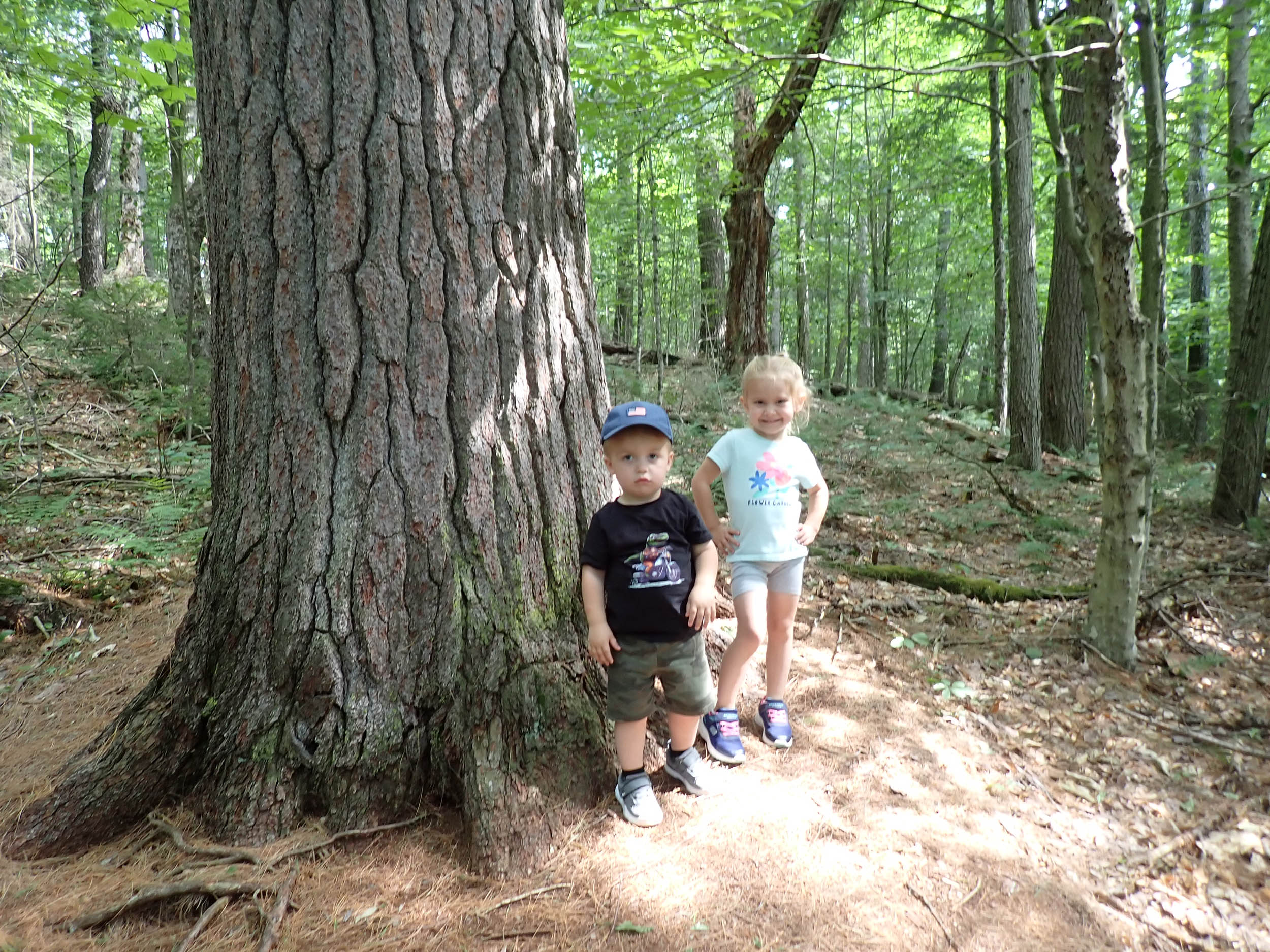
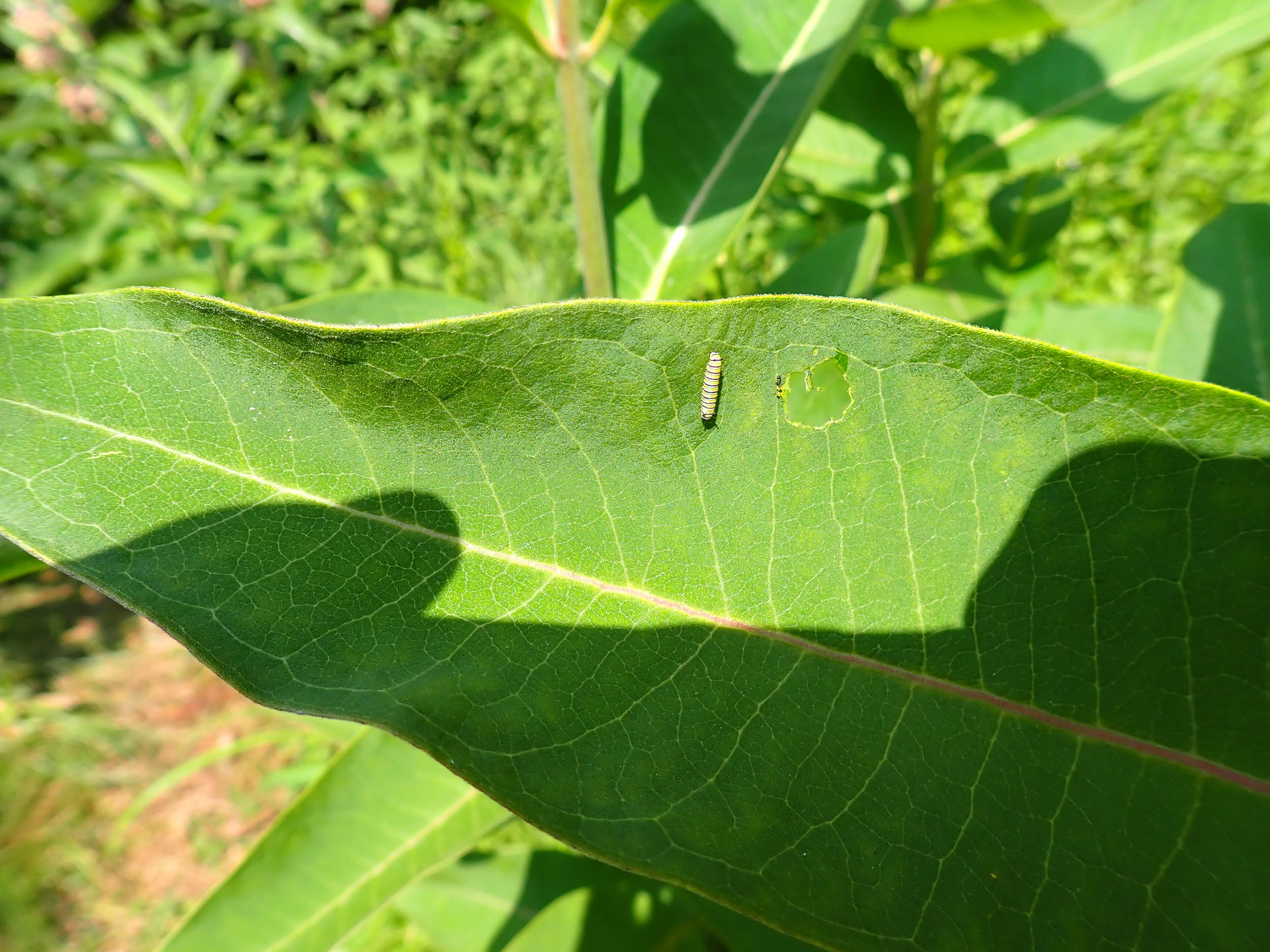
Some of my family was here over the weekend to take in some of the events happening locally as there were many and just enjoy the Adirondacks. They hiked, biked, swam, and canoed to watch Loons of course. We went over to the Cathedral Pines trail to see the big white pines there which are over three hundred years old. We saw the little things, also some of the littlest Monarch caterpillars I ever saw on the milkweeds along the path to the pines and pretty little white flowers along the trail, dew drops.
The Monarchs have been laying eggs on my milkweed and butterfly weed patch all this week. This coming week with rain may slow them down, some as butterflies need sunshine to keep flying as well as the caterpillars growing and feeding on the milkweeds.
Some Moose have been seen in the area but that’s another story. See ya.
Photo above: Monarch Caterpillar