Outdoor Adventures with Gary Lee - Vol. 363
Home from the 51st Crown Point Bird Banding Station where we only saw the sun rise over the fort three times during the two weeks. Two of those sun rises were spectacular and we did get to see the full moon the first night there before that went into the clouds. It was the coldest two weeks that I have spent there as the wind, much of the time was from the north right off Lake Champlain, so we were at lake temperature. It also rained on many days, so the nets were pulled up during those times, one entire day.
Even with the weather being against us, as the birds didn’t want to fly into the freezing air and they stayed further back on the peninsula never coming near our nets on their way north. By my count we banded fifty-five varied species, getting a new species each day and on some days five new species. Total birds banded 525 with Blue Jays leading in numbers at 170, with Yellow- rumped Warblers coming in second at 120. The last morning, we got just one new species a beautiful male Wilson’s Warbler. A Scarlet Tanager was seen near the nets as we were picking up but we didn’t catch it. We had three pages of returns from previous years, many from two years ago and one from four years ago a Common Grackle. We did have lots of birds seen and heard around the site during our two weeks by my count of one hundred and eight and I’m sure I missed some. We had three Eastern Bluebird nests in boxes on site, two Tree Swallows and three House Wrens. The Osprey pair were again on the nest platform, but chicks not hatched yet. A few of the birds we banded had brood patches (bare belly no feathers) indicating they were probably sitting on eggs or about to. I did hear it mentioned that one bird had an egg in the ova duct which was soon to be laid in a nest not far away.
Even with the weather as bad as it was, we had many visitors to the site, many for the first time and others who have come here for several years. Some came as children and now they are bringing their children and many got to release a bird. We had several school groups and a few adult groups who master bander Gordon Howard gave information about banding and what we do at the station. Most who came were greeted and welcomed at the station and given the same information as birds were banded if we had any. Master Bander Ted Hicks, who oversees the station, was always available for information on banding and aging birds and he also banded some Ruby-throated Hummingbirds when we caught them. We had many volunteers this year who helped set up and take down the camp and nets. Then we had several volunteers who were learning to pick birds out of the nets with instruction and age and band birds that helped daily even in the rain and chilly weather. We had a group of students who came over from Middlebury College for a few different days with their instructor Monica to learn about catching and banding birds.
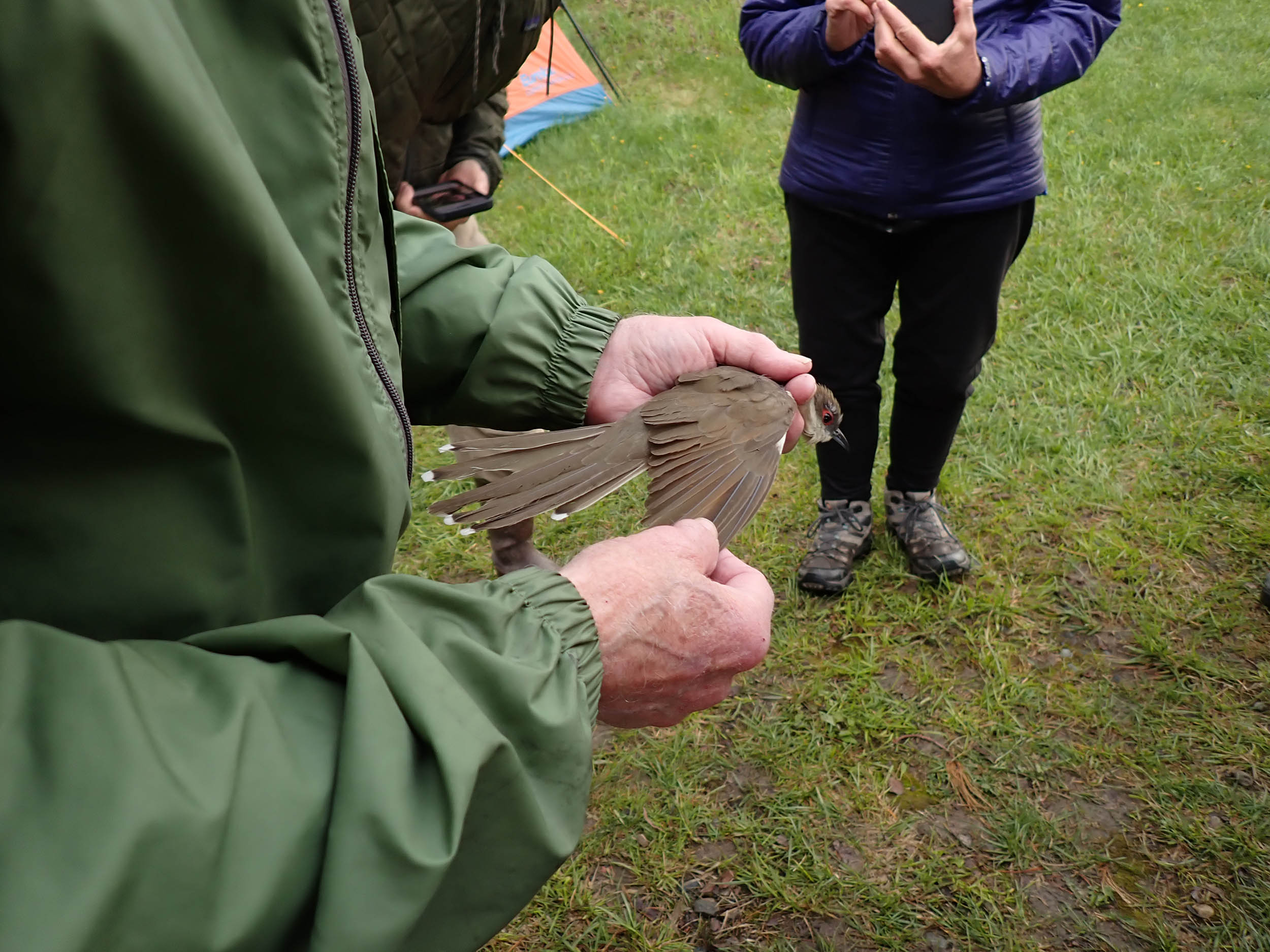
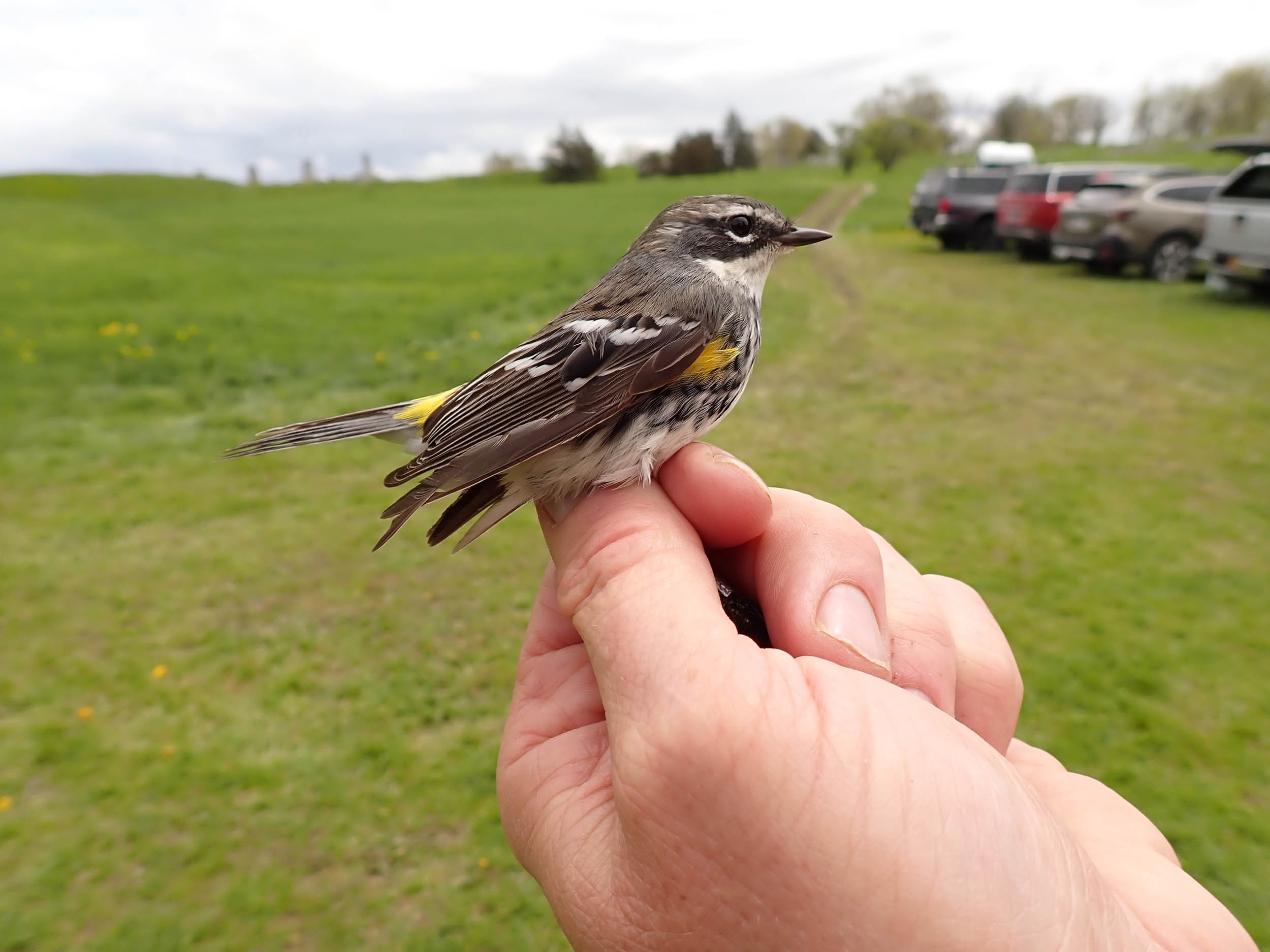
The two big events that happened this year at the station were the catching and banding of a new bird for the station, a Black- billed Cuckoo. They had been seen and heard other years at the station but never caught. There are a few others out there that we haven’t caught. The other big event was catching a foreign bird (that is a bird that someone else had banded in another location and now we have caught it). The first year that Mike Peterson banded here fifty-one years ago, one of the first birds he caught was a Black Capped Chickadee that had been banded in Virginia and not until this year did, we catch a foreign bird. Well Friday afternoon there was a group of Yellow Rumped Warblers caught in the net. They were brought back to the banding table, and it was discovered that one was wearing a band on the left leg. We band on the right leg and as the number on the band was read it certainly was not a bird we banded. Checking with the bird banding lab this bird was banded in Baltimore City, Maryland in October of last year on its way south for the winter. We catch many of our birds as they return to the area, but it took fifty-one years to catch another bird from a different place. A few of our banded birds have been recaptured in other places over the years and we are notified of their capture and where and when. This shows us where are banded birds travel both north and south when they are found.
Spring started so fast and then stalled and now we are back on track but that’s another story. See ya.
Photo above: Ted with foreign retrap Yellow-rumped Warbler